




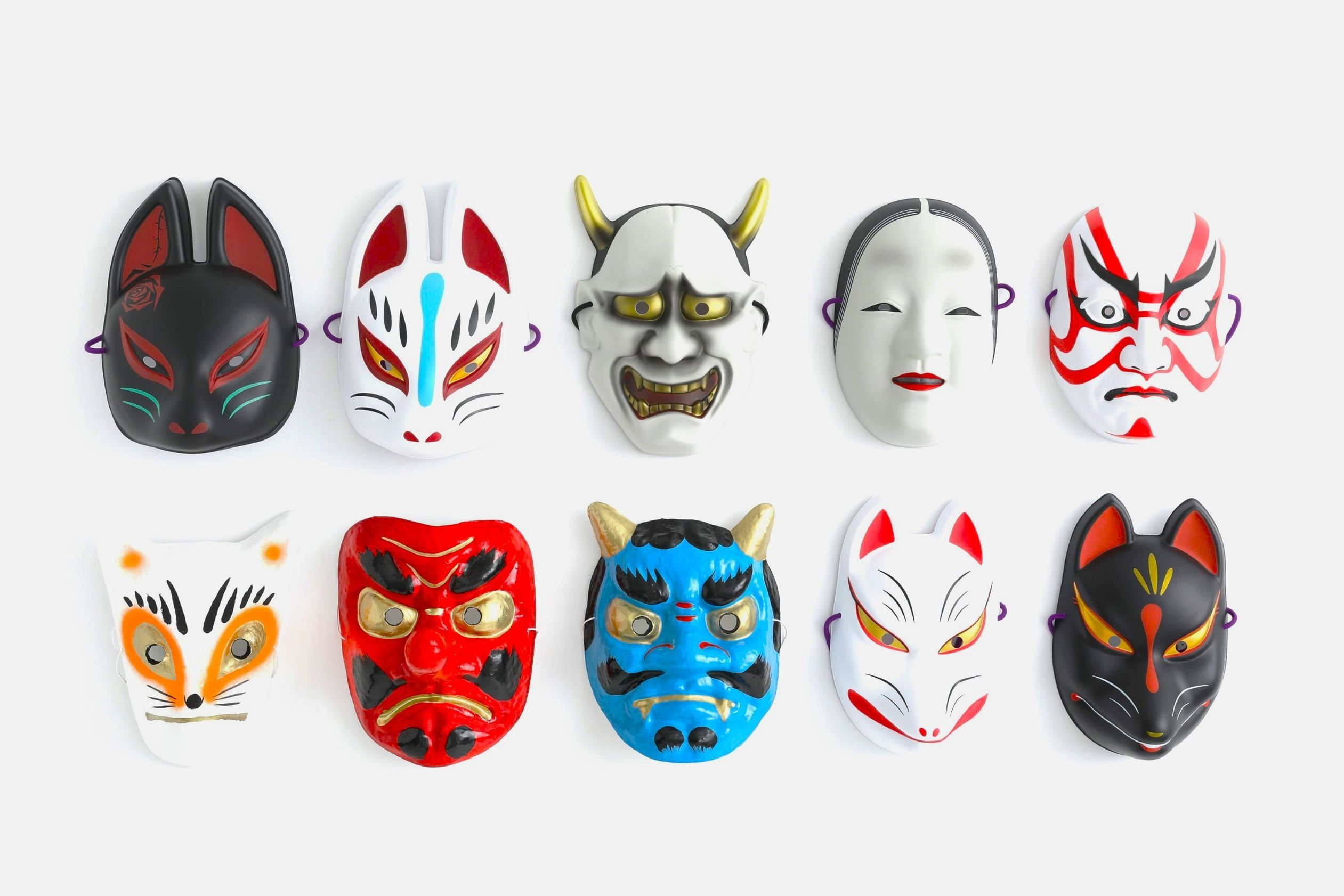
Traditional Japanese masks have been used for centuries, weaving a complex history that bridges the gap between the physical battlefield and the spiritual world. Their origin can be traced back to the ancient Japanese samurai culture, where masks were born from a necessity for both protection and psychological dominance.
The Evolution: From Battlefield to Stage
Originally, masks were primarily used for protection during battle. These masks, covering the lower half or the entirety of a samurai’s face, were designed to shield the wearer from arrows and blades. However, they were more than just armor; they were a tool for “covert operations” and identity concealment, allowing warriors to operate with a layer of anonymity and mystery.
Over time, these functional pieces evolved into a cultural icon. Their use spread beyond the battlefield and into the sacred realms of Shinto shrines and the high-art stages of Japanese theater.
Materials and Craftsmanship
The construction of these masks reflects their purpose:
- Samurai Masks (Men-yoroi): These were often crafted from hardened leather or iron. To make them more intimidating, they were intricately decorated with metal studs, lacquered finishes, and even horsehair to create realistic mustaches and eyebrows.
- Theater Masks (Noh/Kyōgen): As masks moved into theater, the material shifted. Most traditional theater masks are hand-carved from a single block of Japanese Cypress (Hinoki). They were then painted with natural pigments mixed with a glue made from crushed seashells.
Whether made of metal or wood, these masks were designed to capture a vast spectrum of human and supernatural emotion—ranging from fierce and intimidating to calm, serene, and hauntingly beautiful.
The World of Japanese Masks: Key Categories
The world of Japanese masks is wide, and many terms regroup a large variety of styles. Here is an overview of the most iconic masks and the secrets behind them.
1. The Warrior’s Protection: Samurai Men-yoroi
Before they were art, masks were armor.
Men-yoroi is the umbrella term for samurai face armor. Within this category, you find Menpō (half-face) or Sōmen (full-face). These were designed to look like ghosts, old men, or demons to strike fear into the hearts of enemies while providing a secure anchor for the heavy Kabuto (helmet).
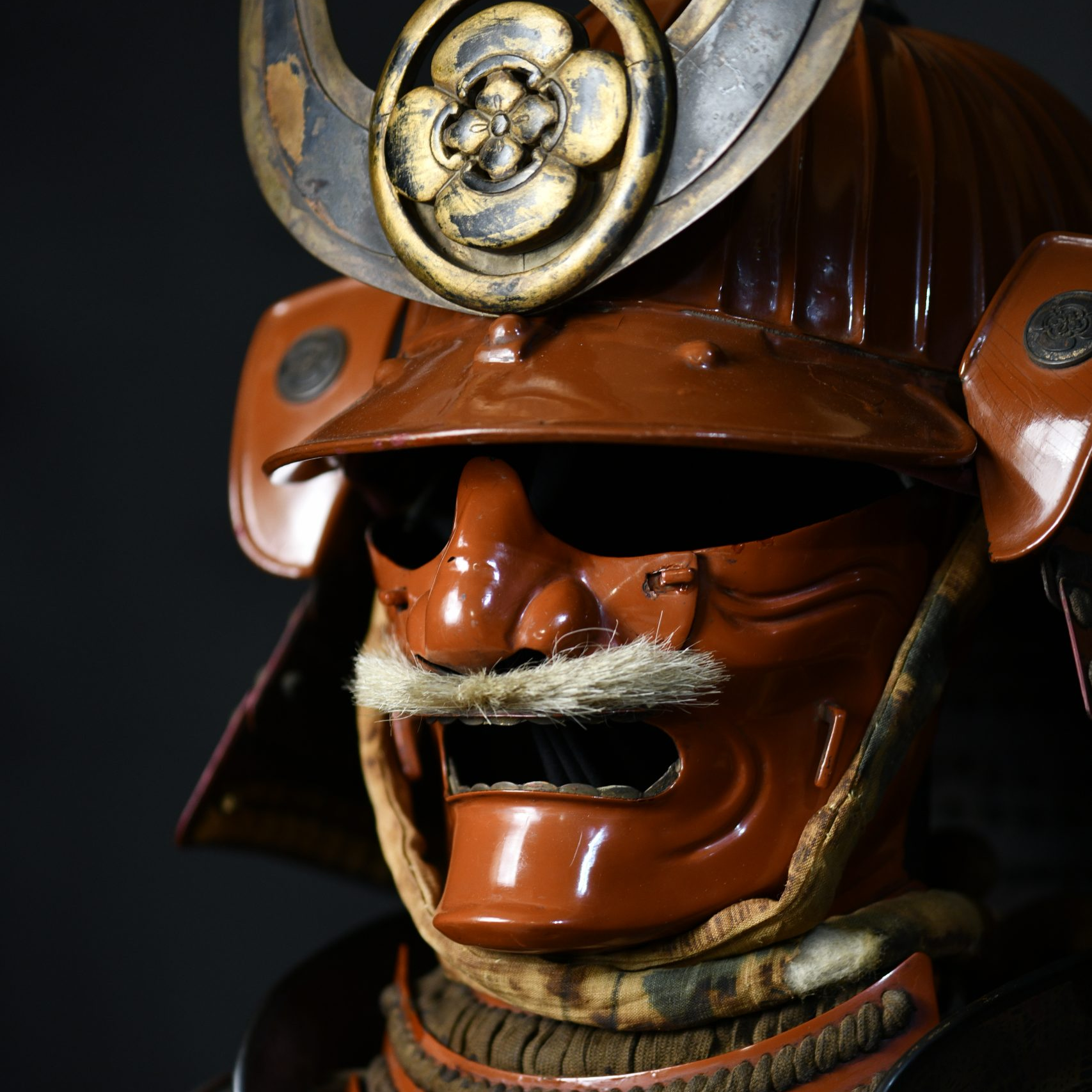
- The Purpose: Not only did they protect the face from arrows and blades, but they also acted as a base for the heavy Kabuto (helmet).
- The Fear Factor: These masks often depicted Sōmen (full face) or Menpō (half face) with fierce expressions, bristly mustaches, and gold teeth to intimidate opponents on the battlefield.
2. The Spirits of the Stage: Noh & Kyogen Masks
In Noh theater, the mask is the character. A skilled actor can make a wooden mask “cry” or “laugh” simply by shifting the angle of his head.
The Hannya: The Three Stages of Jealousy
In Noh theater, the Hannya isn’t just a “jealous woman”. it represents a specific stage of demonic transformation caused by obsession.
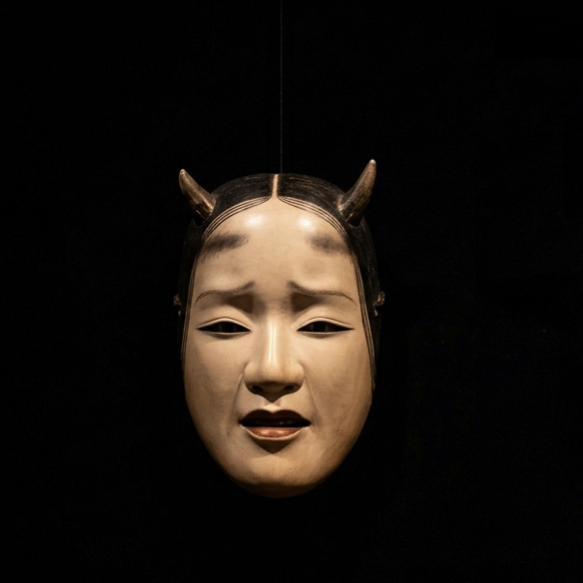
Namanari: The first stage. The woman still has a human face but has begun to grow small, budding horns. She is filled with dark thoughts but hasn’t lost her humanity.
Chunari: The middle stage. The horns are longer, and sharp fangs appear.
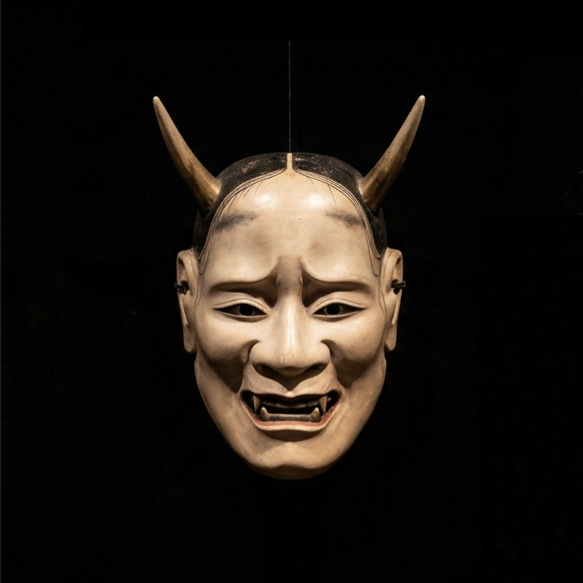
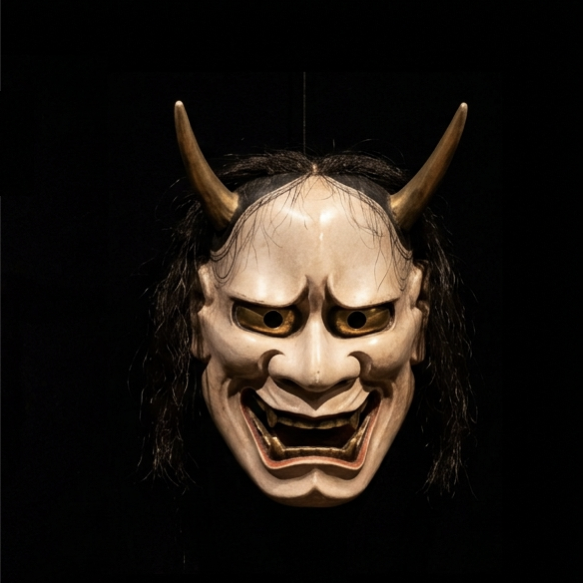
Hannya: The final stage of obsession and rage. The woman has completely lost her humanity, becoming a full demon with metallic eyes and a gaping mouth.
The “Tilt” Factor: A master Noh actor can make a Hannya mask look like it is screaming in rage or weeping in sorrow just by tilting his head. This is called teru (tilting up to show joy/anger) and kumoru (tilting down to show sadness).
Okame & Hyottoko: The Faces of Joy
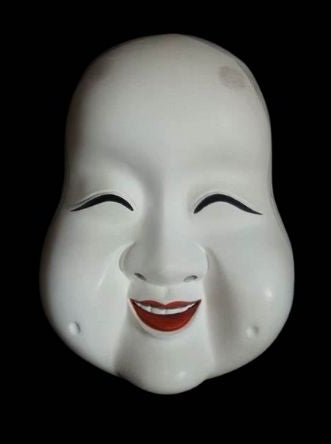
Okame (Otafuku): With her plump cheeks and smile, she represents the “Goddess of Mirth.” She is a symbol of good fortune, happiness, fertility, and a happy marriage.
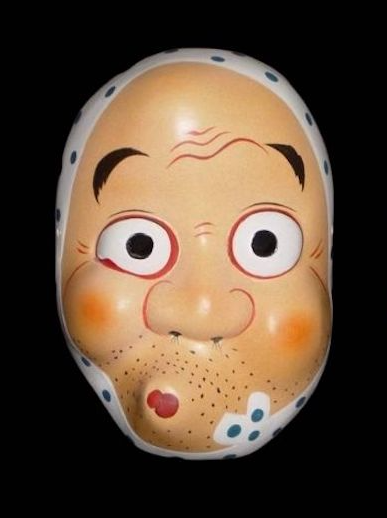
Hyottoko: A comical character with a puckered mouth, often depicted blowing air through a bamboo pipe into a fire. He is the god of luck and is often paired with Okame in folk dances.
3. The Supernatural: Oni, Tengu, and Kitsune
These masks are the stars of Japanese festivals (matsuri).
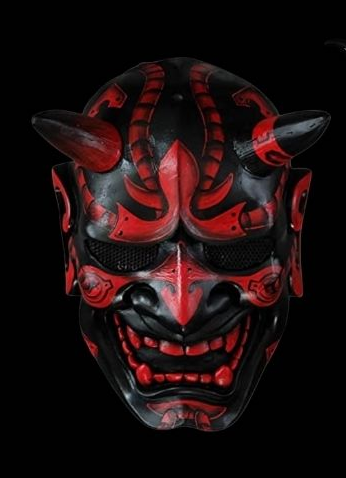
The Oni (Demon): Representing an ogre or demon with fierce horns and sharp teeth. While they look scary, Oni masks are often used during Setsubun (Spring festival) to drive away bad luck. To wear an Oni mask is to take on the role of the “guardian” who protects against evil.
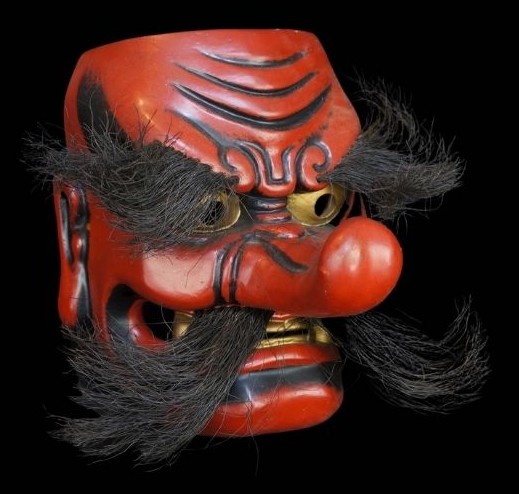
The Tengu (Mountain Goblin): A mythical creature recognized by his long red nose. The Tengu was once a villain but is now seen as a protector of martial arts and forests. Originating from Buddhist mythology, they represent a complex mix of good and evil.
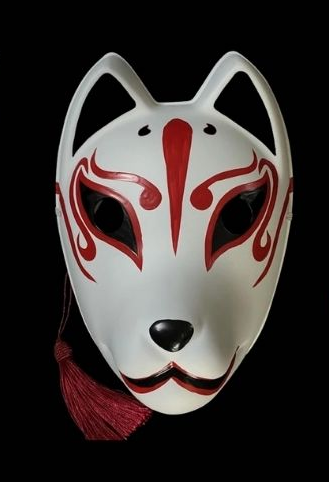
The Kitsune (Fox): The fox is a sacred animal in Japanese Shinto folklore, believed to be the messenger of Inari (the rice god). Kitsune masks are usually white or red with pointed snouts. Wearing a white Kitsune mask symbolizes a connection to the spiritual world and is a staple of “Fox Weddings” (Kitsune no Yomeiri) festivals.
Why Collect Japanese Masks Today?
Today, these masks are no longer used for war, but they remain a vital part of Japanese identity. They are used in Hinamatsuri (Doll Festival) and Children’s Day celebrations to invite strength and health.
For the modern home, they serve as powerful decorative items. When displaying a Noh mask, it is traditional to place it slightly above eye level. This mimics the “neutral” position used by actors to maintain a mysterious, balanced expression that seems to follow you across the room.
Looking for more Japanese tradition?
Browse our Hand Made Magewappa Bento Box or Traditional Japanese Fan to complete your Japanese aesthetic.