




In Praise of the Trace: Why Japan Prefers Eternal Ink Over the Transient Cloud
Look at your phone. How many photos from your previous travels are sleeping in the darkness of your cloud storage, condemned to never be seen again? In the immediacy of our connected lives, memories have become volatile data. But in Japan, there is a poetic resistance: the art of the impression.
The Goshuin: A Conversation Between the Divine and the Fiber
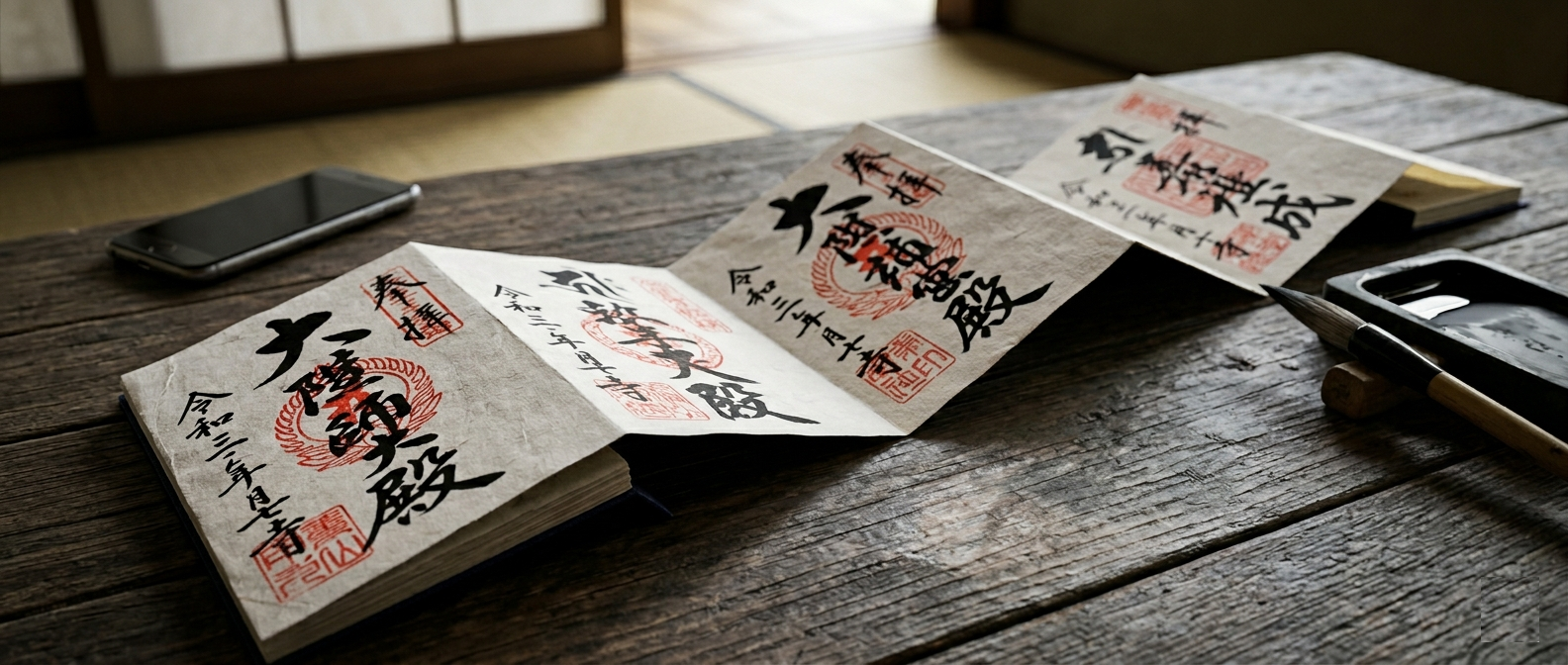
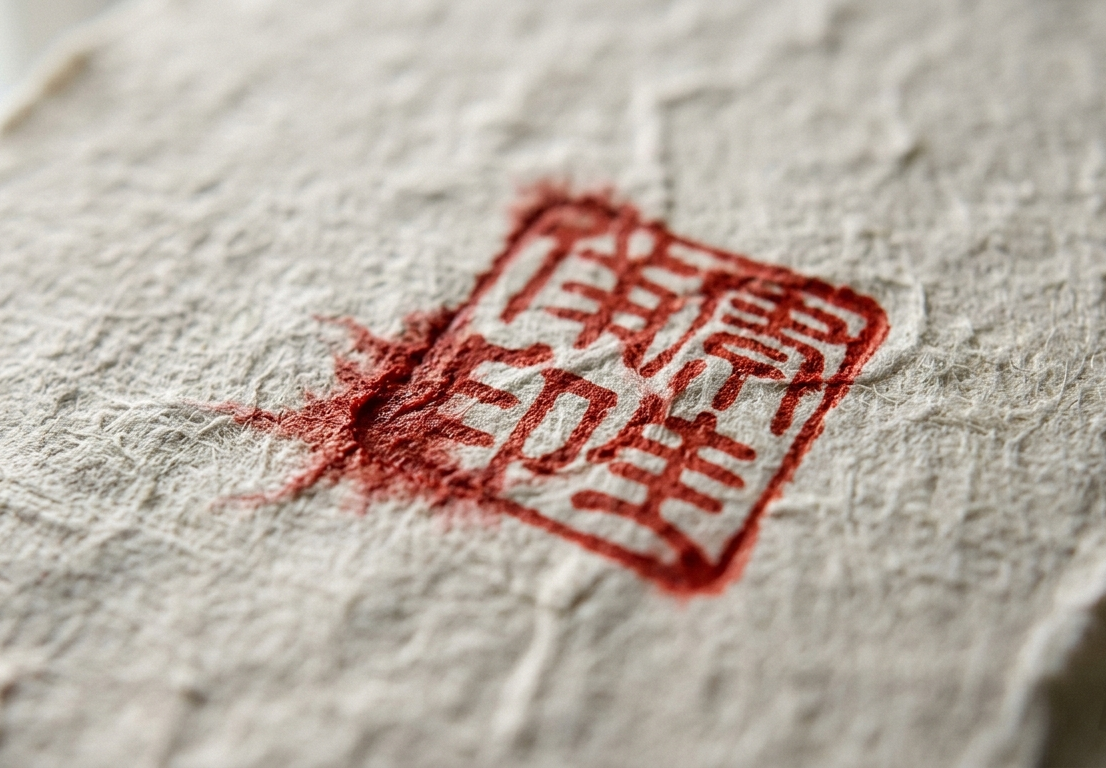
It all began in the silence of Nara’s temples in the 8th century. The Goshuin was not a souvenir, but a seal of devotion. The pilgrim would offer a hand-copied sutra and receive a unique calligraphy in return. Imagine the scene: the friction of the ink stick on the stone (Suzuri), the monk’s held breath, and finally, the dull thud of the wooden seal striking the paper. It is more than a signature; it is a Go-en, a sacred bond printed for eternity into the fibers of Washi paper.
The Geography of the Heart: From Stations to Summits
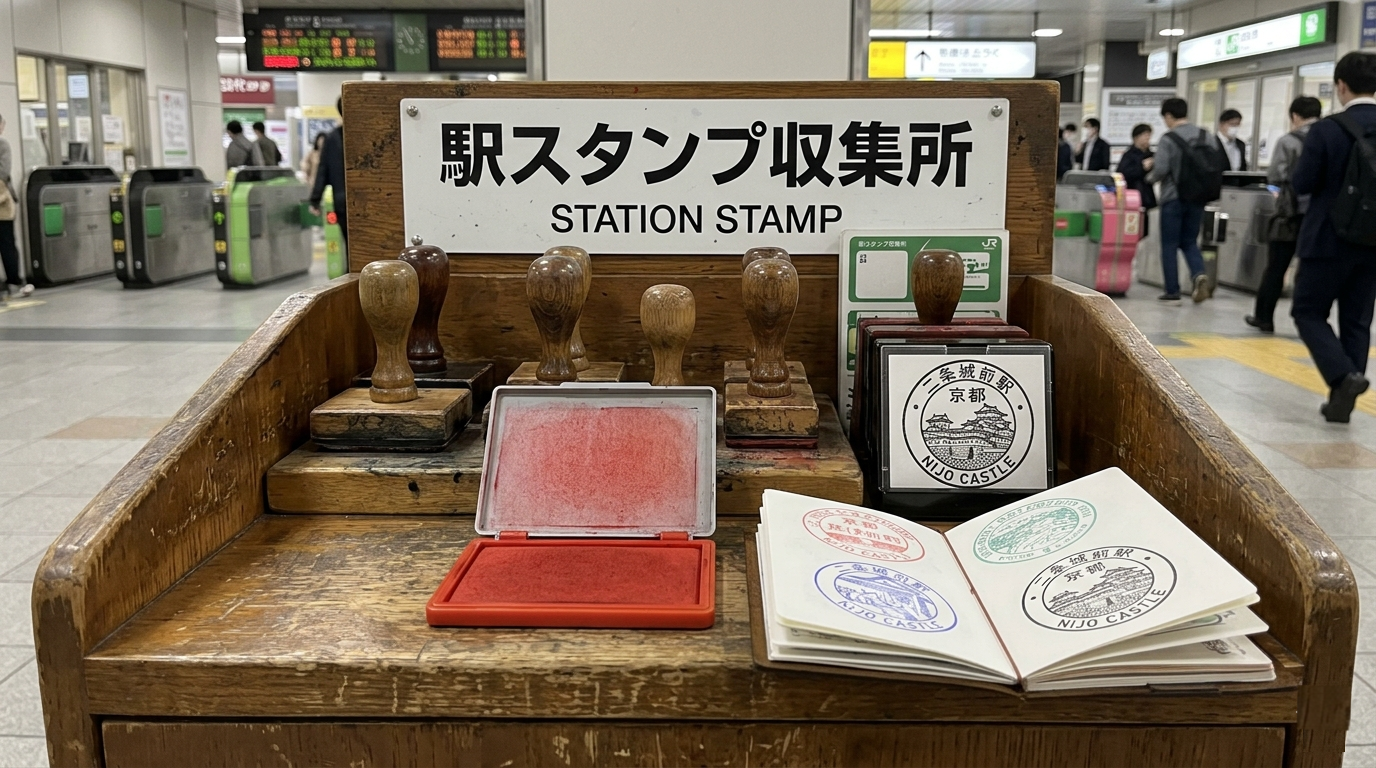
This quest became democratized with Eki Stamps. Since 1931, every Japanese train station has offered its own seal, celebrating a local specialty or a landscape. Collecting these impressions is about transforming a simple train ride into a tactile treasure hunt. It is about accepting that travel is a succession of physical moments, not just a gallery of interchangeable digital photos.
The Sensory Ritual: Why Washi Changes Everything
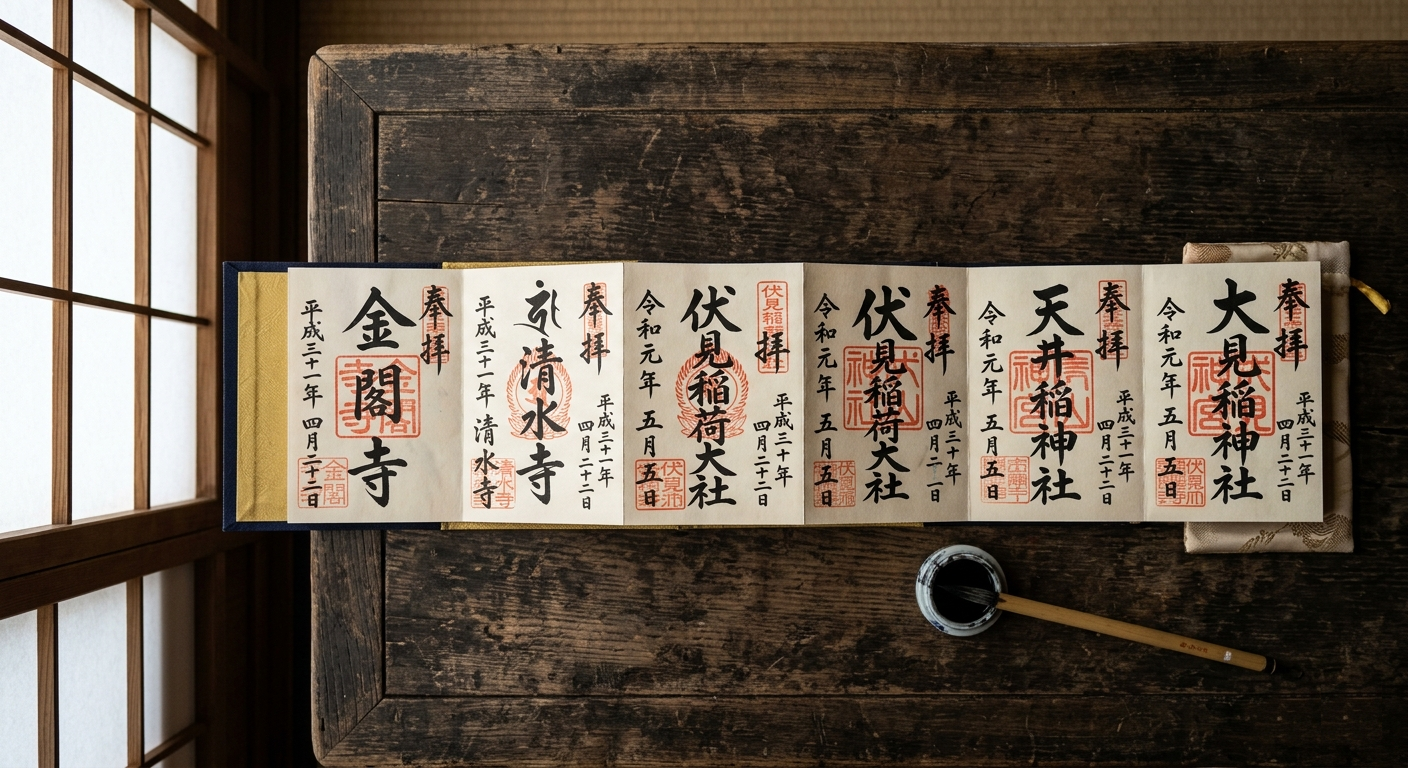
The magic lies in the imperfection. The Goshuincho notebook, with its accordion fold (Orihon), allows you to unfold your journey in a single gesture.
- Sound: The “clack” of the seal meeting the wooden table.
- Scent: The woody fragrance of pine-soot ink.
- Touch: The irregular texture of mulberry fibers absorbing the red Shuniku ink.
This is where Wabi-sabi expresses itself: the beauty in the imperfection of a brushstroke that bleeds slightly or a red that isn’t uniform. It is alive.
The Shokunin’s Secret: The Rule of the Sacred
A detail that travel guides often forget: Japan strictly separates the sacred (Temples/Shrines) from the profane (Stations/Museums). A monk may refuse to mark your book if it contains a “Hello Kitty” station stamp. Respecting this etiquette means understanding that every object has a place and a soul. Own two notebooks, for one does not mix the divine with the everyday.
From the Trace of a Place to the Mark of the Self
Collecting the seals of others is the first step toward mindfulness. But there comes a moment when the traveler, the artist, or the entrepreneur feels the need not just to receive an impression, but to give one.
Affixing your own seal is about closing a chapter, validating a thought, or signing a commitment with an authority that a ballpoint pen can never match. This same quest for authenticity drives the spirit of personalized Hanko. As an extension of this travel tradition, owning your own hand-carved seal is about carrying a piece of this Japanese philosophy into your daily life.
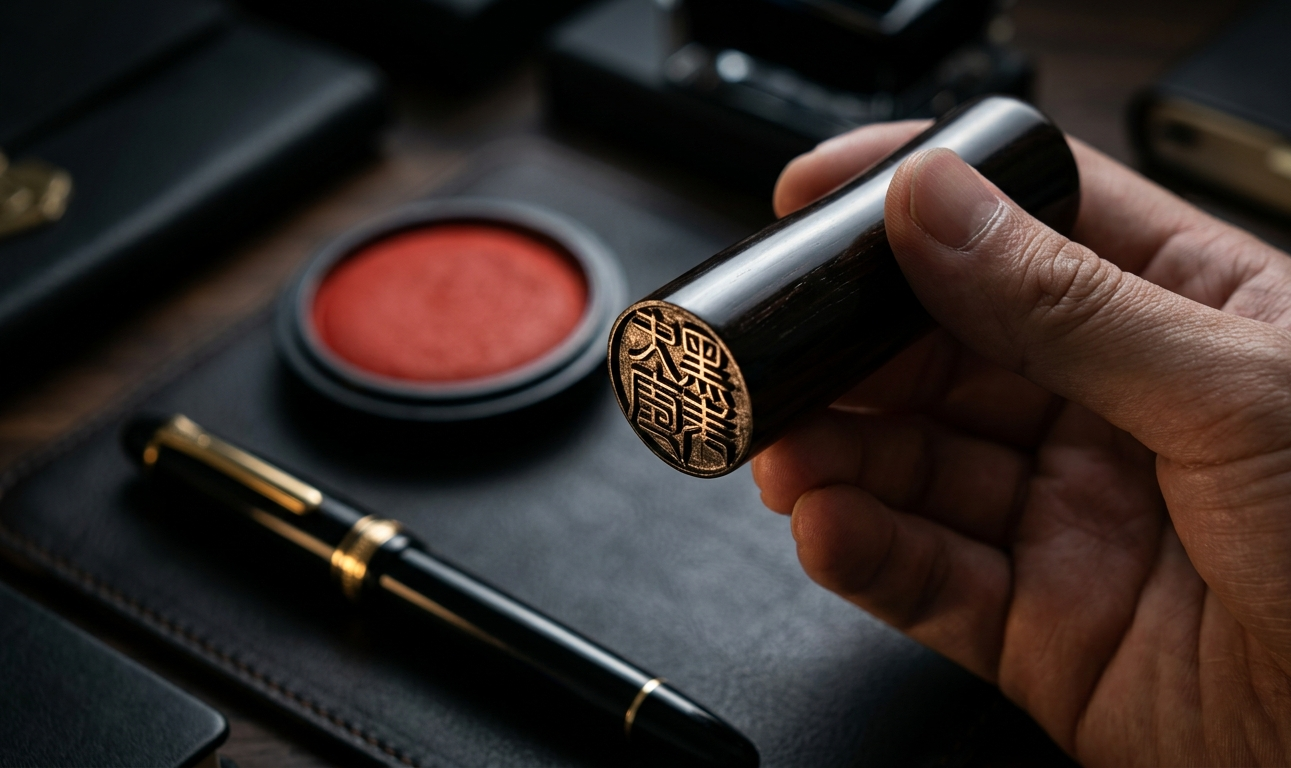
At Comhanko, we see each creation as a bridge between your identity and the heritage of master engravers: an indelible print so that your signature, too, transcends the centuries.
Take the time to visit our shop and products.