





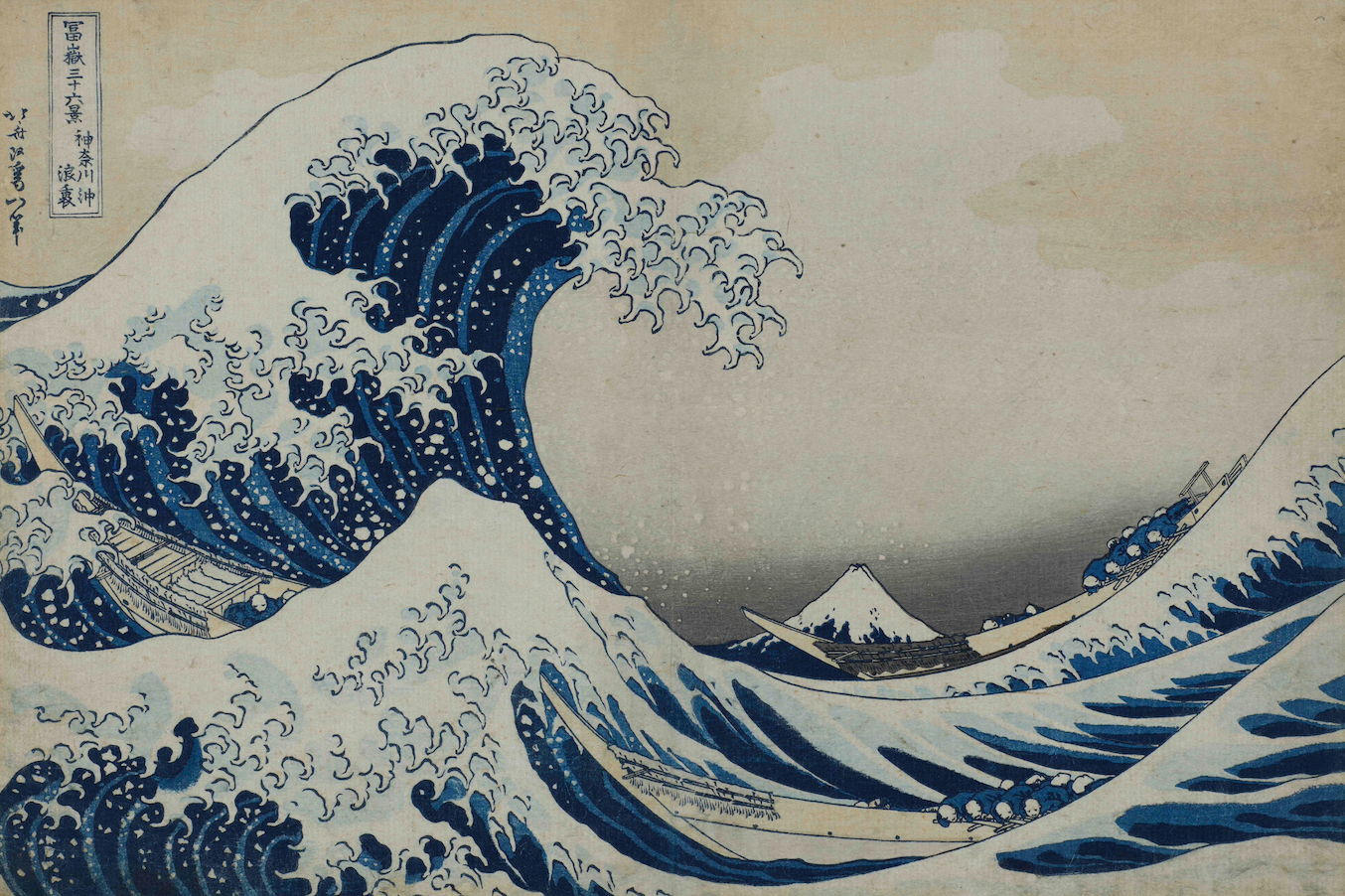
In March 2026, the manga and anime industry reached a historic milestone with a global market value estimated at $25.2 billion. This colossal figure demonstrates an unprecedented cultural hegemony: today, one in every three books sold worldwide is a Japanese comic. Yet, this financial power originates in the simplicity of ink lines centuries old, forming a unique bridge between 12th-century Buddhist scrolls and ultra-modern streaming platforms.
Origins and History: From Animal to Samurai
Japanese graphic narration was not born in the 20th century but is part of a thousand-year tradition of the moving image.
The Roots: Chōjū-giga
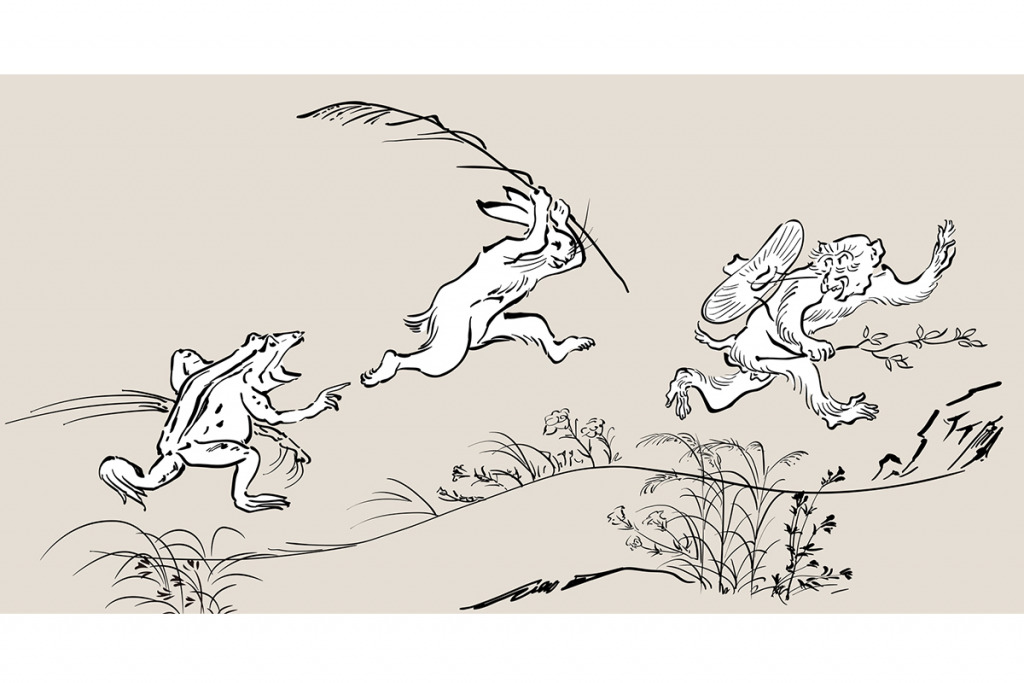
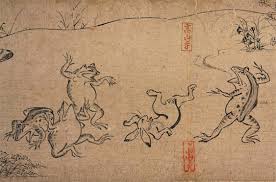
The first “manga” in a structural sense is often identified in the 12th-century Chōjū-giga (Frolicking Animals). These paper scrolls (emaki) already used speed lines and successive scenes to tell a story without text.
The First Anime: Namakura Gatana (1917)
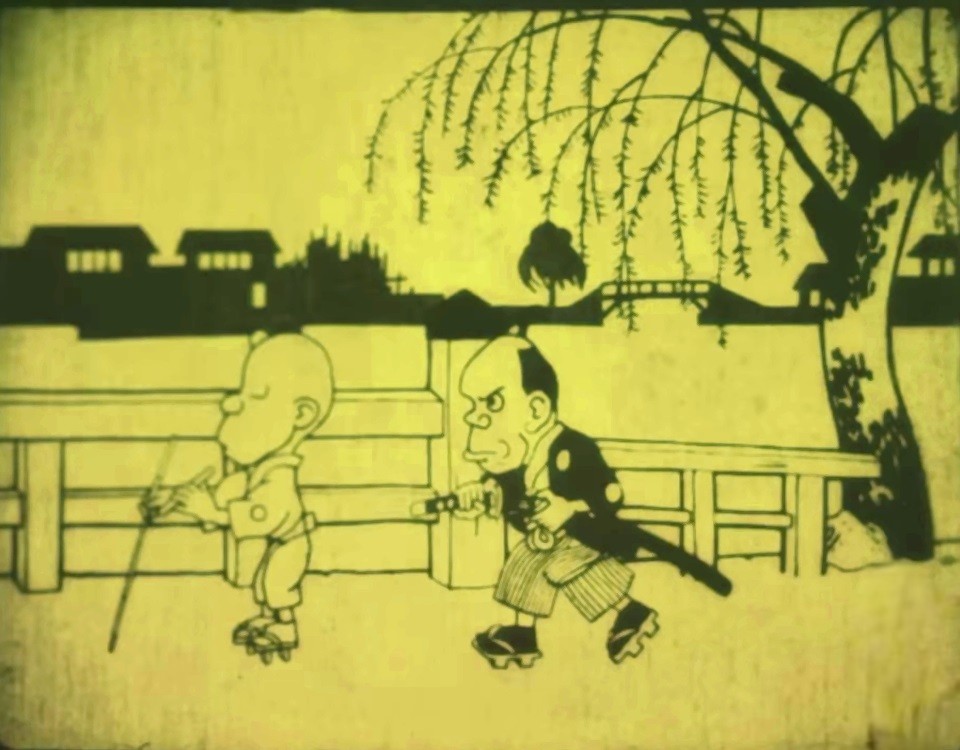
Japanese animation took its official first steps in 1917 with Namakura Gatana (The Dull Sword). This two-minute short film, recently rediscovered, laid the foundations for the humor and expressiveness that would become the signature of anime. At the time, it was a handcrafted experiment cut by hand.

Hokusai: Father of the Name, Not the Genre
Historical confusion often persists around Katsushika Hokusai. In 1814, the print master published Hokusai Manga.
While he is technically the “founding father” of the term (Manga meaning “free drawing” or “whimsical sketch”), he did not invent the current narrative format. Hokusai captured moments of life, monsters, and landscapes in sketchbooks intended for his students. Modern manga, with its paneling and speech bubbles, only appeared after the encounter between this Japanese aesthetic and cinematic staging techniques imported from the West.
Traditions and Craftsmanship: The Art of the Line
Japanese craftsmanship is distinguished by obsessive technical rigor. The traditional mangaka works according to a precise ritual:
- G-pen inking: A metal tool that allows for line thickness variation based on pressure, giving life and dynamism to characters.
- The “Ma” (Negative Space): Unlike saturated Western comics, manga uses empty space to direct the eye and emphasize the passing of time.
- The Digital Transition: In 2026, while 90% of production has moved to graphic tablets (Clip Studio Paint), digital textures and brushes are coded to perfectly mimic paper grain and India ink imperfections.
Leading Figures: The Architect Osamu Tezuka
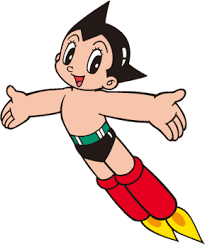
If Hokusai provided the name, Osamu Tezuka built the empire. Dubbed the “God of Manga,” he published Astro Boy in 1952. Tezuka was the first to apply cinematic codes—close-ups, low angles, decomposition of movement—to comics. He also created the low-cost anime production system, allowing massive weekly television broadcasts, a model that still dominates the industry today.
A Global Sales Phenomenon
The global market exploded between 2020 and 2026, driven by digital consumption. France remains the world’s second-largest consumer of manga, but the United States and India show the most aggressive growth. This dominance is no longer just cultural; it is structural: streaming platforms and vertical reading apps (Webtoons) have made Japanese content instantly accessible everywhere on the globe.
What about you? Which anime has marked your journey? The one you could reread or rewatch without ever getting tired? Share your favorite in the comments!