





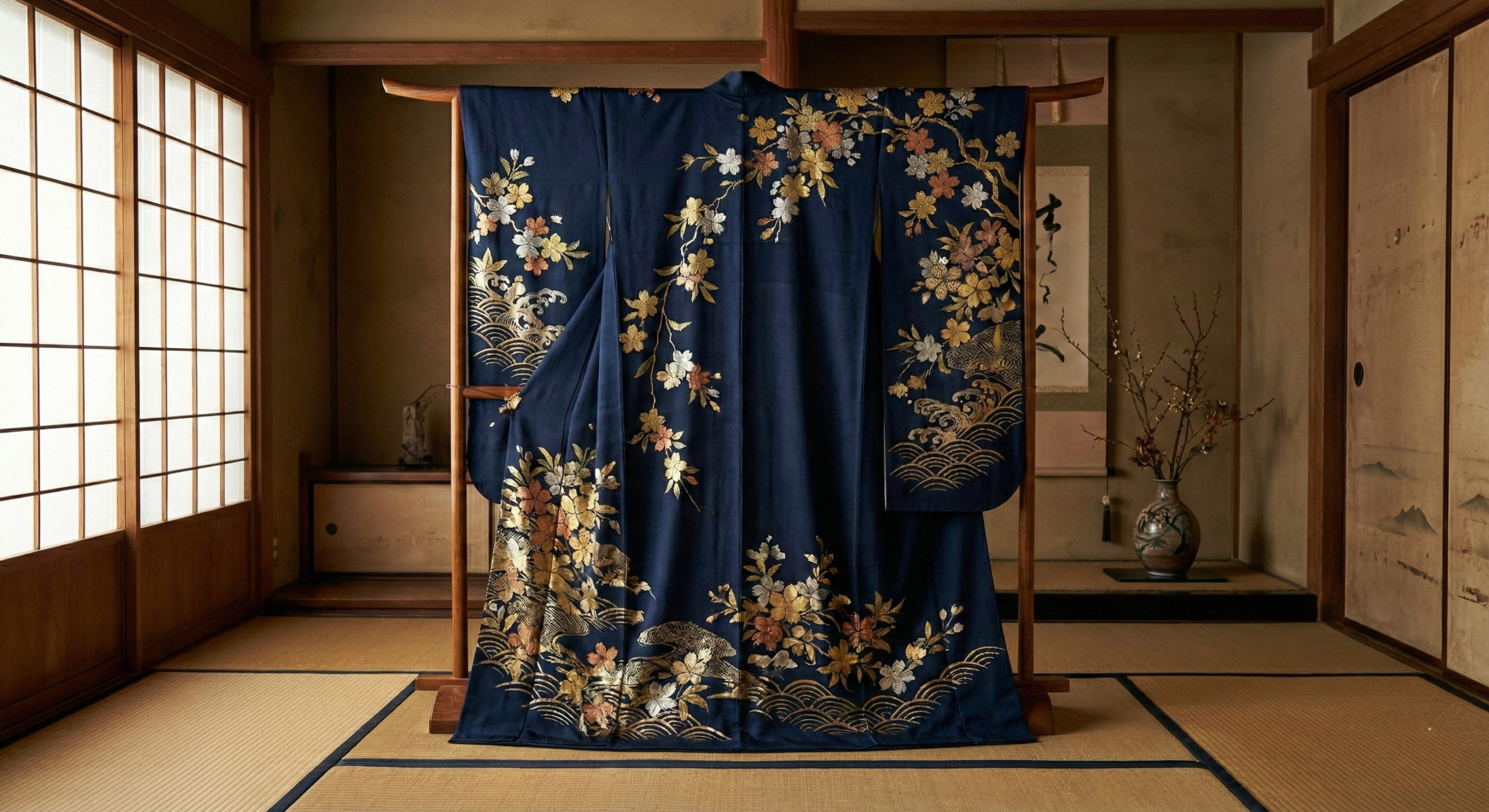
“Kinsai is the art of controlled brilliance. It is the moment where the static nature of metal is forced to yield to the fluid grace of silk.”
In the quiet intersection where textile meets mineral, there exists an art form that does not merely decorate fabric, it breathes light into it.
This is Kinsai, the ancient Japanese technique of “gold painting.” It is a practice of patience, where the artisan’s breath must be held steady, lest a single stray gust scatter the metallic soul of the work.
The Roots of Radiance: History and Origin
The story of Kinsai is one of evolution. While the use of gold in Japanese art dates back centuries, the specific technique of applying metallic leaf and powder to silk reached its zenith during the Momoyama period.
Originally reserved for the robes of the ruling elite and the sacred garments of the priesthood, Kinsai was born from a desire to capture the fleeting brilliance of sunlight on moving fabric. It was not enough for a garment to be colorful; it had to glow. Over generations, what began as simple leaf-pressing evolved into a complex ritual of stenciling, adhesive chemistry, and multi-layered dusting that defines the craft today.
The Ritual of Creation
To witness the crafting of Kinsai is to watch a silent ballet of precision. The process is a three-act play of transformation:
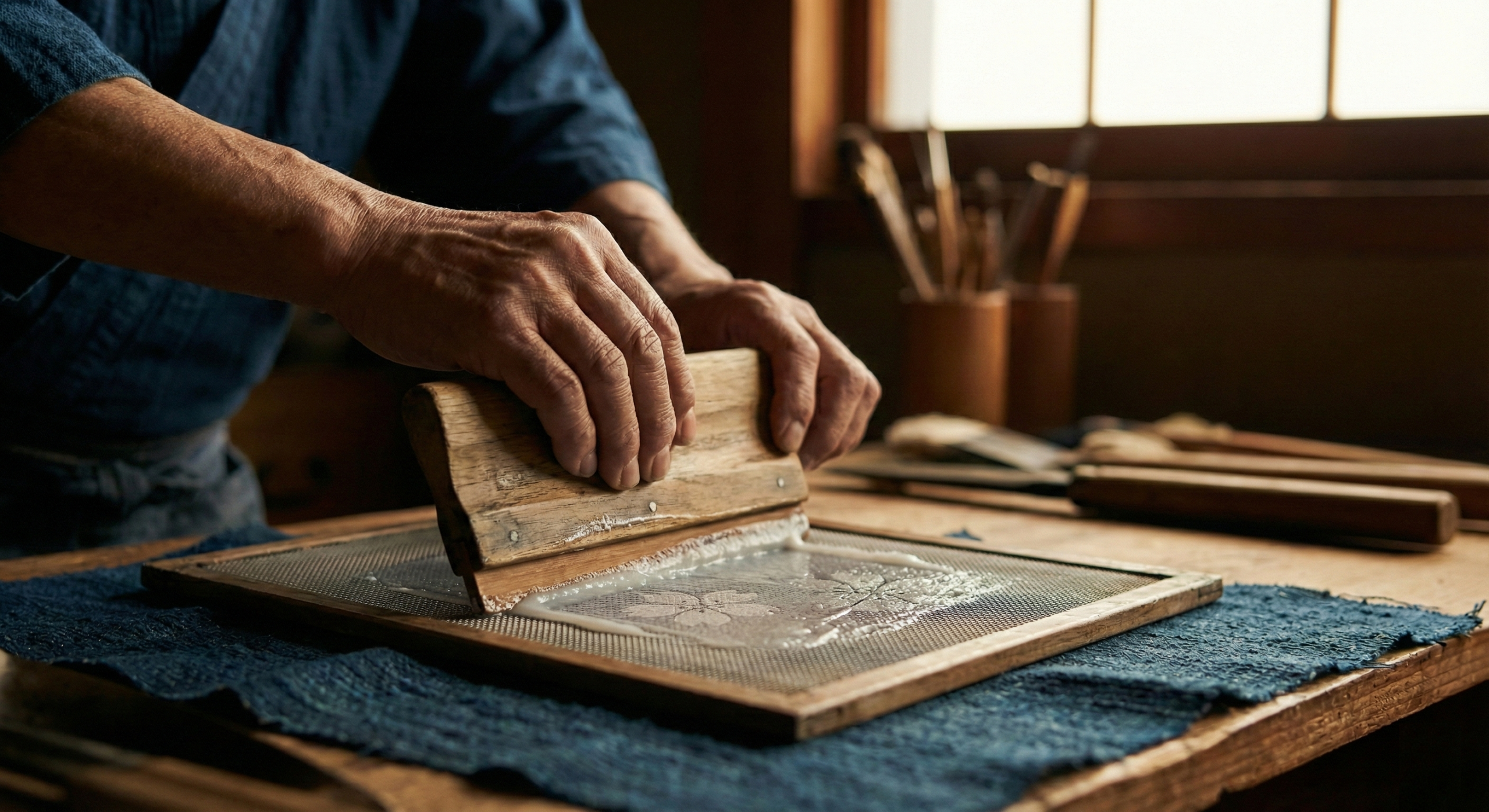
The Blueprint of Adhesion Before the gold appears, there is the glue. An artisan lays a delicate stencil over the fabric, often a deep, dark silk that provides a dramatic stage for the metal. Using a flat spatula, a specialized adhesive is pressed through the screen. This is the foundation; if the glue is uneven by even a fraction of a millimeter, the gold will lose its voice.
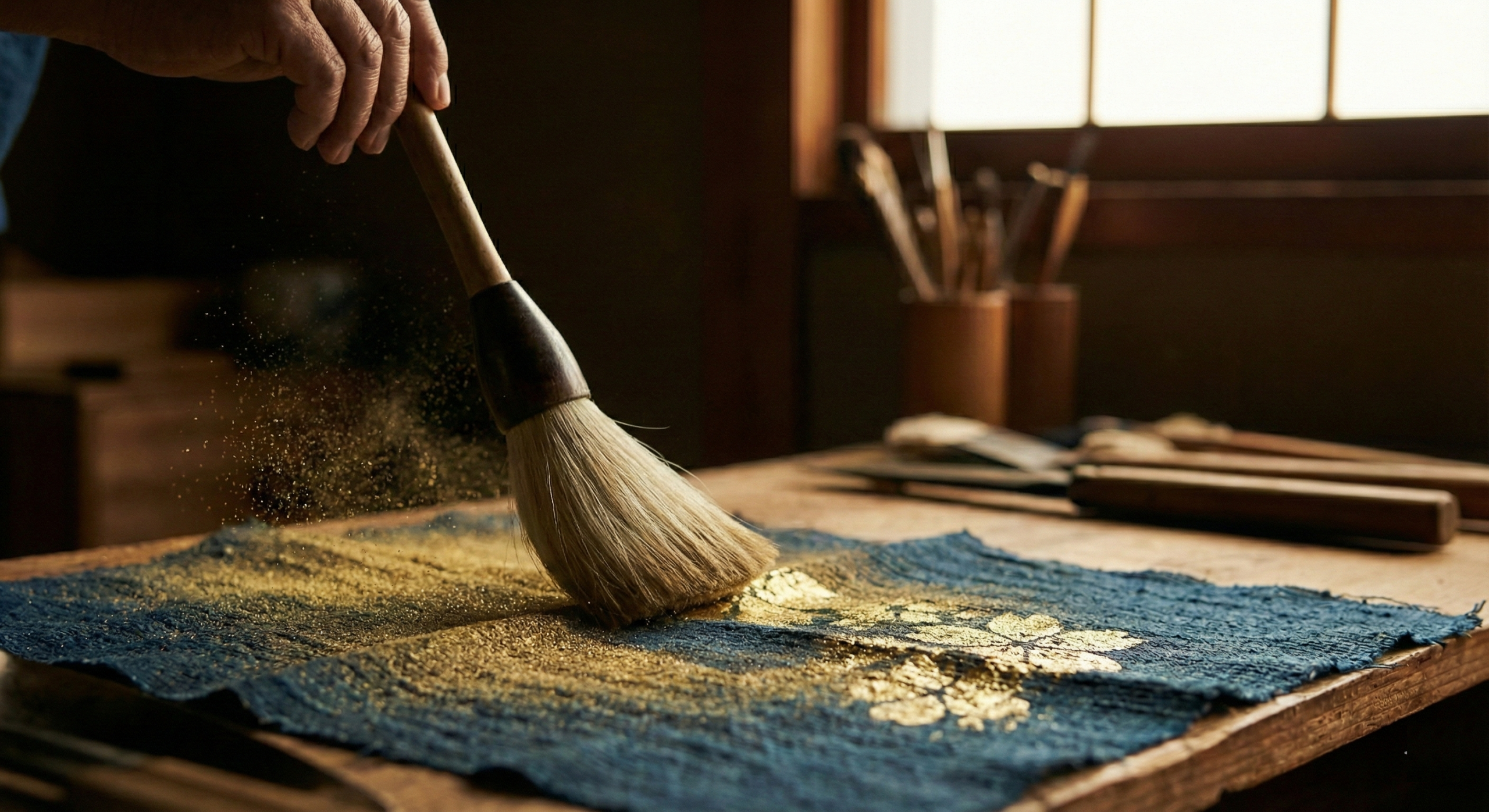
The Golden Reveal Once the adhesive reaches a state of “perfect tackiness,” the artisan introduces the gold. Fine metallic powder is dusted over the surface. At first, it looks like a chaotic cloud, but as a soft brush sweeps away the excess, a miracle occurs: the intricate patterns of cherry blossoms, wheels, or waves emerge from the darkness in brilliant, sharp relief.
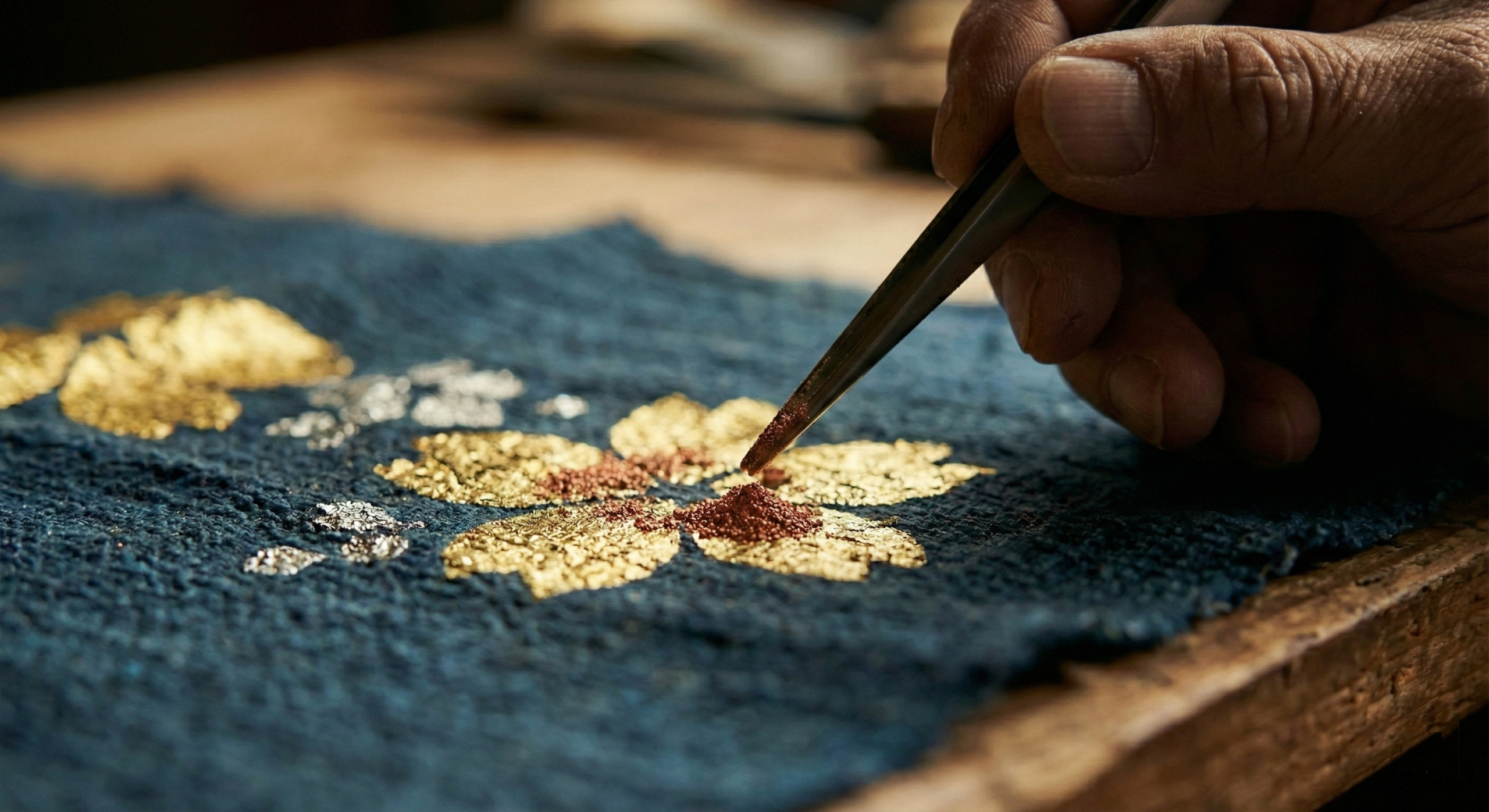
The Dimension of Light True Kinsai is never flat. To create gradation, the artisan layers different shades of gold and copper powders. Using tweezers to place individual flakes or fine brushes to blend metallic hues, they create shadows and highlights. This ensures that as the wearer moves, the design shifts and dances, mimicking the depth of a three-dimensional sculpture.
At its heart, Kinsai is a celebration of the ephemeral. It acknowledges that while gold is permanent, the way we perceive it depends entirely on the angle of the sun and the movement of the body. It is a reminder that beauty is not just seen; it is experienced through the interplay of light and shadow.
The artisan does not just apply a material; they curate a reflection. Every stroke of the brush and every grain of dust is a tribute to a tradition that refuses to let the “old ways” fade into the dim light of history.