




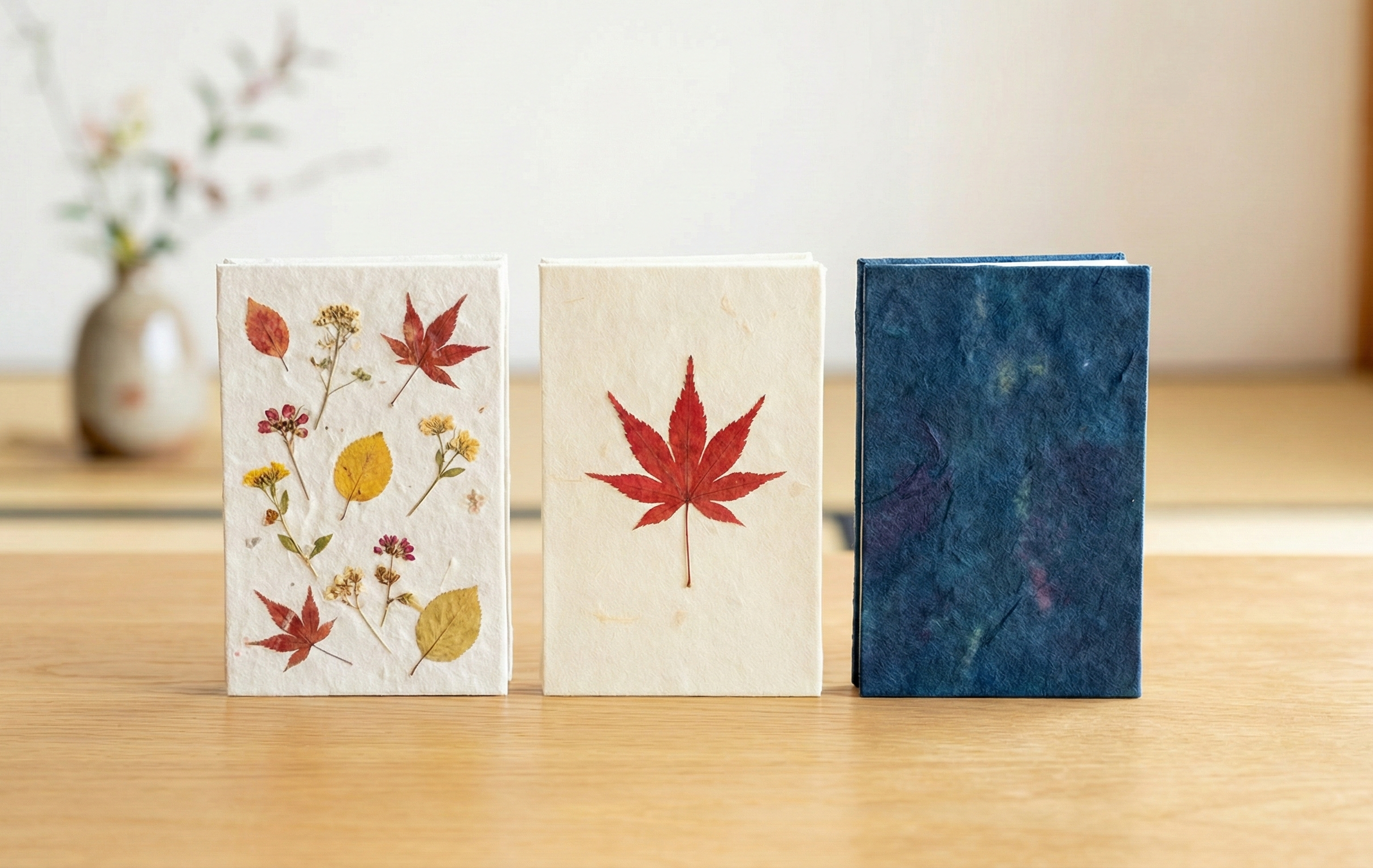
The Goshuin (御朱印) is a cherished tradition in Japan, serving as a spiritual “stamp of approval” for visitors to shrines and temples. More than just a souvenir, it is a sacred record of a person’s pilgrimage and a connection to the divine.
Origin and History
The practice of Goshuin dates back to the Nara and Heian periods. Originally, these seals were given as receipts to worshippers who offered hand-copied sutras (Shakyo) to a temple. Over centuries, the practice evolved. By the Edo period, pilgrimage became a popular form of travel for the masses, and the Goshuin evolved into the artistic stamp and calligraphy we see today. Each Goshuin is unique, featuring the temple’s name, the date of visit, and a specific deity’s seal, usually handwritten in elegant sumi ink by a monk or priest.
The Process: Crafting a Goshuin Book by Hand
While the stamps themselves are received at religious sites, the Goshuincho (the book used to collect them) is often a work of art in its own right. Creating one from scratch involves traditional papermaking and careful assembly.
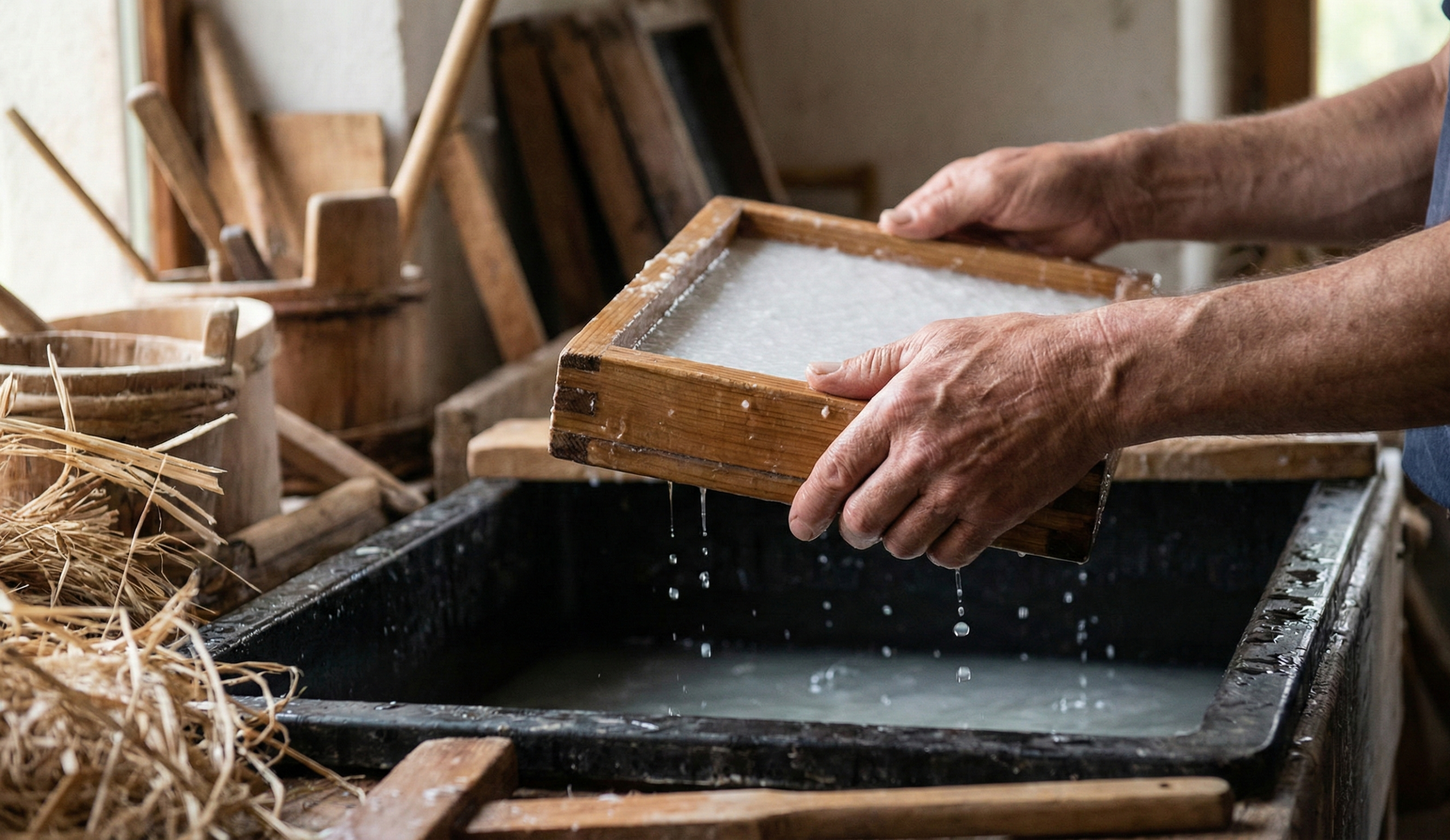
Step 1: Scooping the Pulp The foundation is handmade Washi paper. Mulberry pulp (Kozo) is mixed with water and a binding agent. Using a wooden frame called a mould, the artisan scoops the pulp, gently shaking it to distribute the fibers evenly. This ensures the paper is strong enough to hold the heavy ink of the calligraphy.
Step 2: Designing with Pressed Flowers To make each book unique, decorative elements like pressed autumn leaves or delicate flowers are placed directly onto the wet paper. This allows the natural elements to become embedded in the texture of the cover.
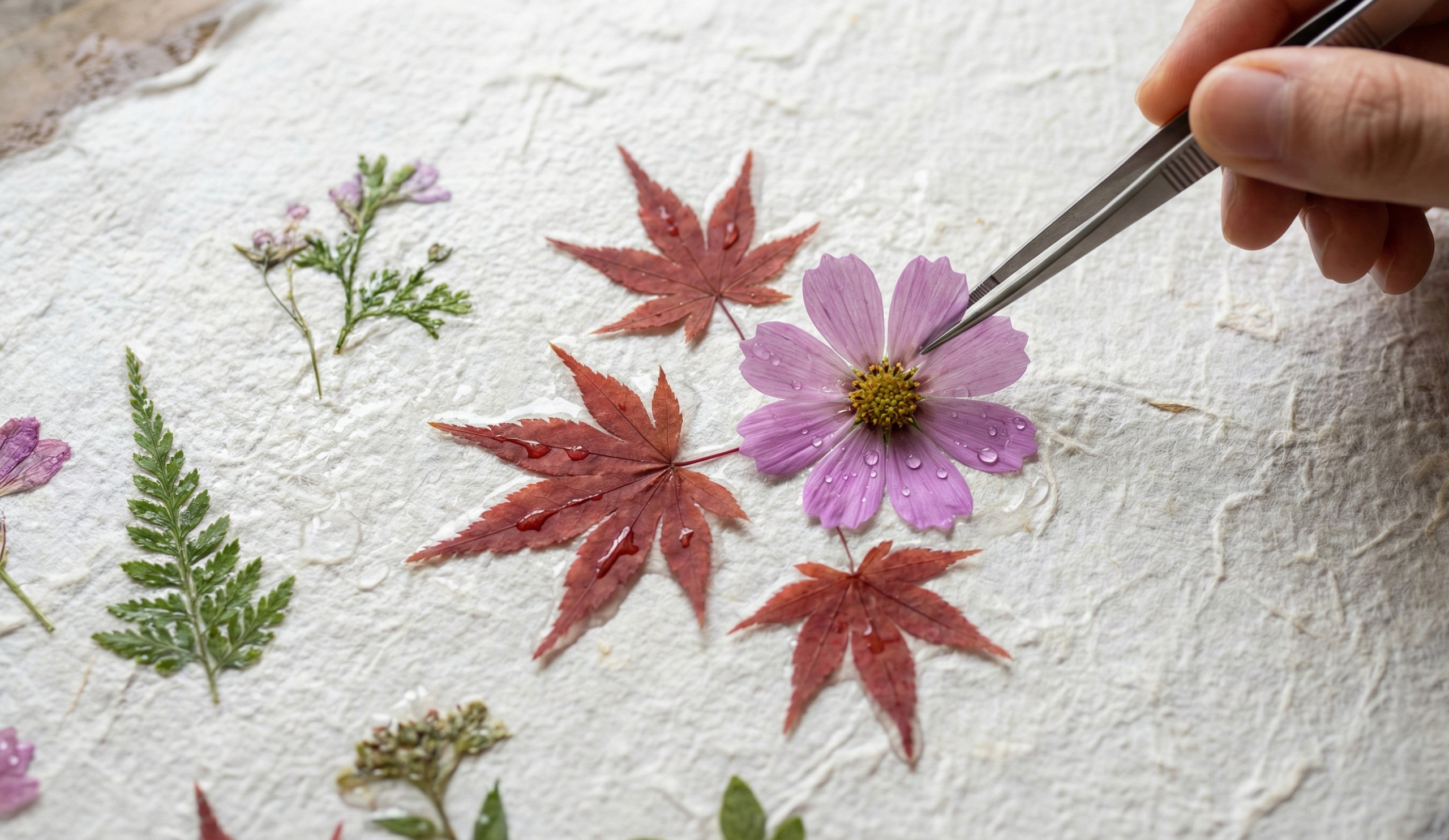
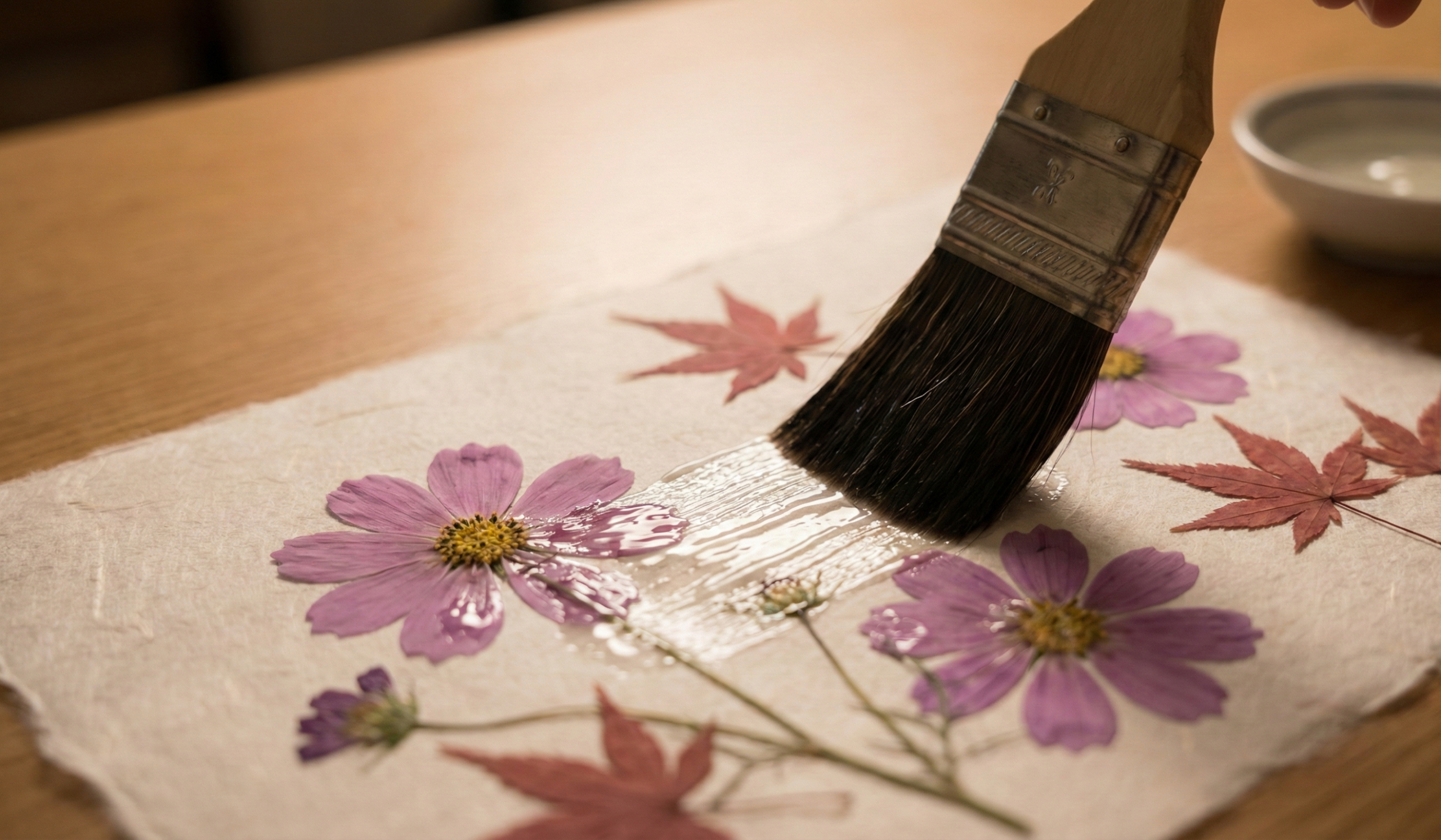
Step 3: Applying the Adhesive A layer of glue is brushed carefully from the center outward. This secures the decorative elements and ensures the surface is smooth, removing any air bubbles that could interfere with the final finish.
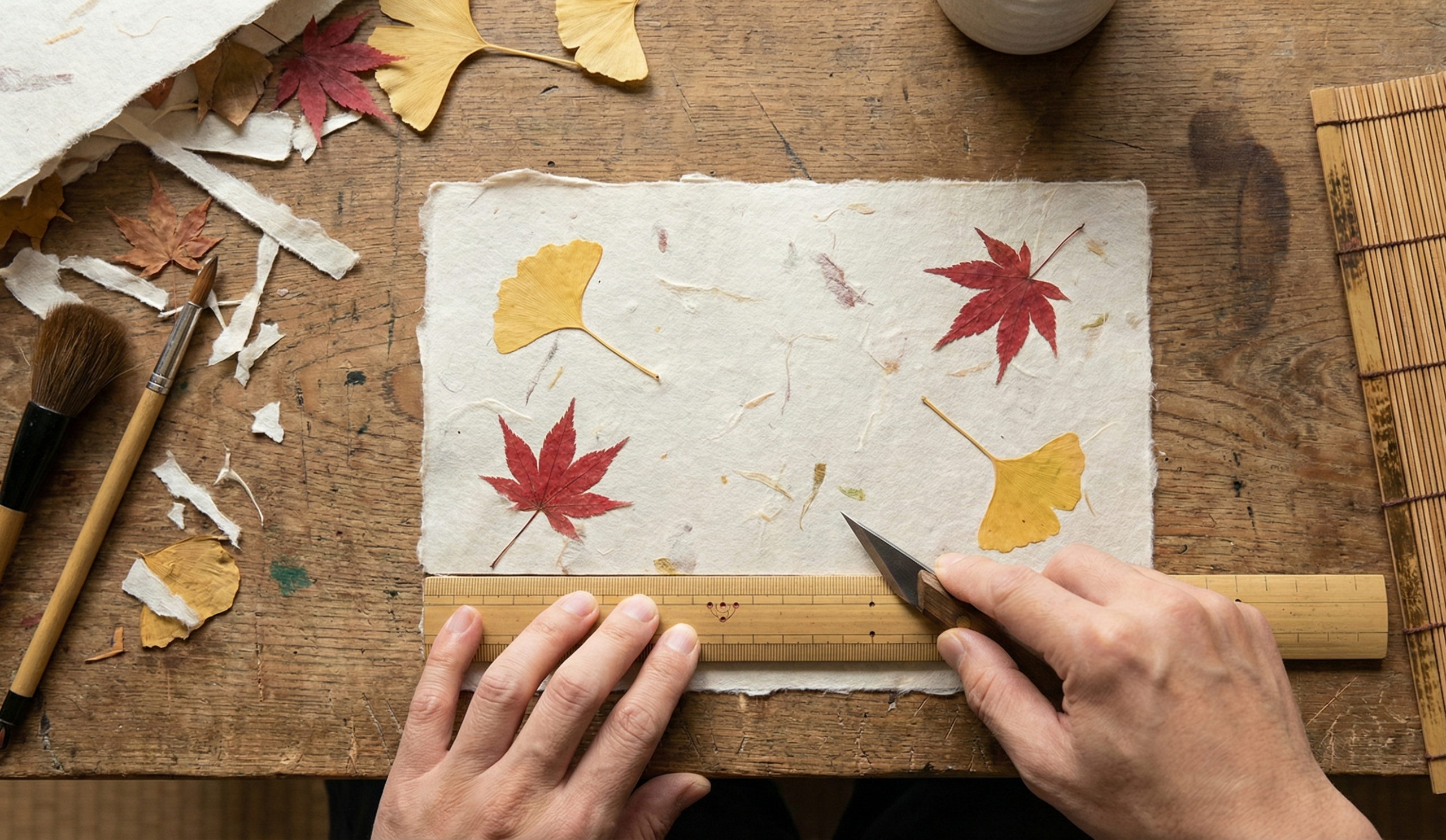
Step 4: Precision Cutting Once the paper has dried, the front and back covers are cut to size. This requires a steady hand and sharp tools to ensure the edges are crisp and fit the accordion-style pages of the journal perfectly.
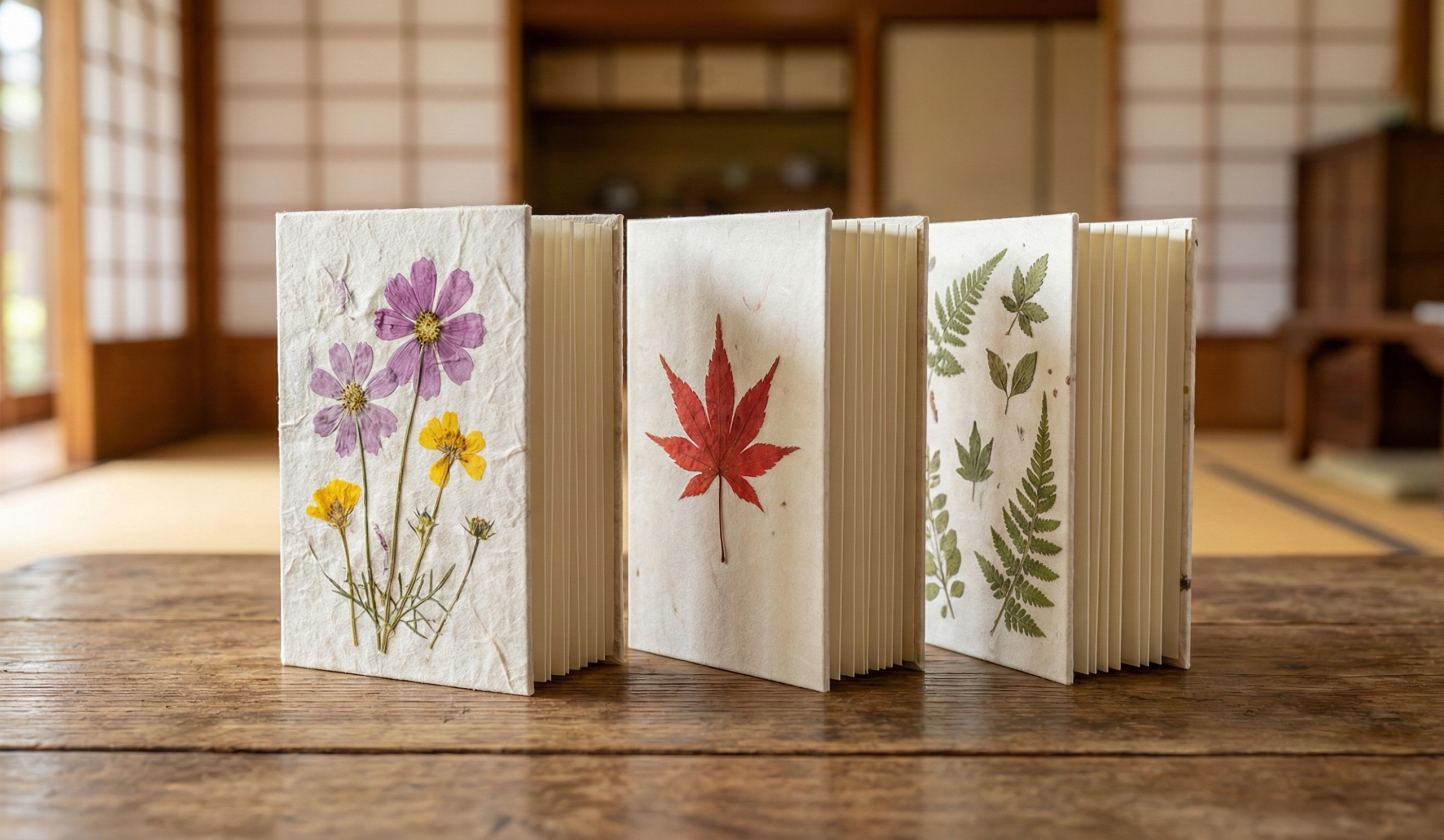
Step 5: Final Assembly The decorative Washi covers are attached to the internal pages. This final step transforms raw materials into a functional spiritual journal, ready to hold a lifetime of memories and blessings.
A Living Legacy
The art of Goshuin is far more than a simple collection of stamps; it is a profound intersection of spiritual devotion and masterful craftsmanship. From the rhythmic scooping of mulberry pulp to the final assembly of the accordion-style pages, every step reflects a deep respect for the natural world and the passage of time.
Owning a handmade Goshuincho transforms a journey through Japan into a tangible narrative. Each page becomes a bridge between the ancient traditions of the past and the personal experiences of the present. Whether you are a casual traveler or a dedicated pilgrim, this craft offers a unique way to carry a piece of Japan’s soul with you, preserving memories in a vessel as beautiful as the sites it honors.